
Strata Repairs and Maintenance
Lesson 12: Vandalism, graffiti and wear and tear
Goal: respond to vandalism properly, remove graffiti cleanly, and keep the evidence that lets the body corporate recover the cost of damage.
Wear and tear or damage?
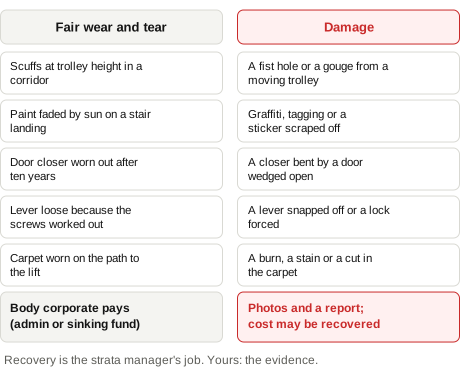
Fair wear and tear is the slow decline from normal use, and the body corporate pays to fix it. Damage is caused by someone, by accident or on purpose. Most states’ by-laws let the body corporate recover the cost of damage from the owner or occupier responsible, but only if it can show who did it. That’s where you come in.
Your job: the evidence
For any damage, before you repair anything:
- Photograph it: wide, then close, with something for scale. Include the date.
- Write down what you know: when it was found, the last time it was undamaged, who reported it, any move in or move out that day, any CCTV coverage.
- Report it to the strata manager the same day.
- Keep any removed parts (a broken lever, a damaged panel) until the strata manager says you can throw them out.
Practitioner tip: most corridor damage happens on move days. Photograph the lift, corridor and doors on the route before and after every booked move. It turns “we didn’t do that” into a short conversation.
Vandalism
- Make it safe first. Broken glass, exposed wiring, a door that won’t lock: board, tape or cordon off, and call the right trade (Lesson 1).
- Report it to police if it’s deliberate. A police event number is often needed for an insurance claim.
- Repair quickly. A building that looks cared for gets less vandalism. Broken things left broken invite more.
- Design it out where you can: tougher hardware, a corner guard, better lighting, a vandal-resistant light fitting. Suggest these to the committee when the same spot is hit twice.
Removing graffiti
Practitioner tip: remove graffiti fast, ideally within 24 to 48 hours. Graffiti that stays up gets added to; graffiti removed quickly tends not to come back.
Match the method to the surface, and test on a small hidden spot first:
| Surface | Method |
|---|---|
| Painted wall | Paint over in the building’s colour, to a break (Lesson 6). Spray paint and marker can bleed: use a stain-blocking primer first |
| Bare brick, render, concrete | Graffiti remover made for porous masonry, a stiff brush, then rinse. Heavy tags may need a contractor with a hot pressure washer |
| Glass, metal, powder-coated doors | Graffiti remover for smooth surfaces, or a plastic scraper; no abrasives |
| Signs, stickers | Lift stickers with heat from a hair dryer, then remove adhesive residue with a suitable solvent |
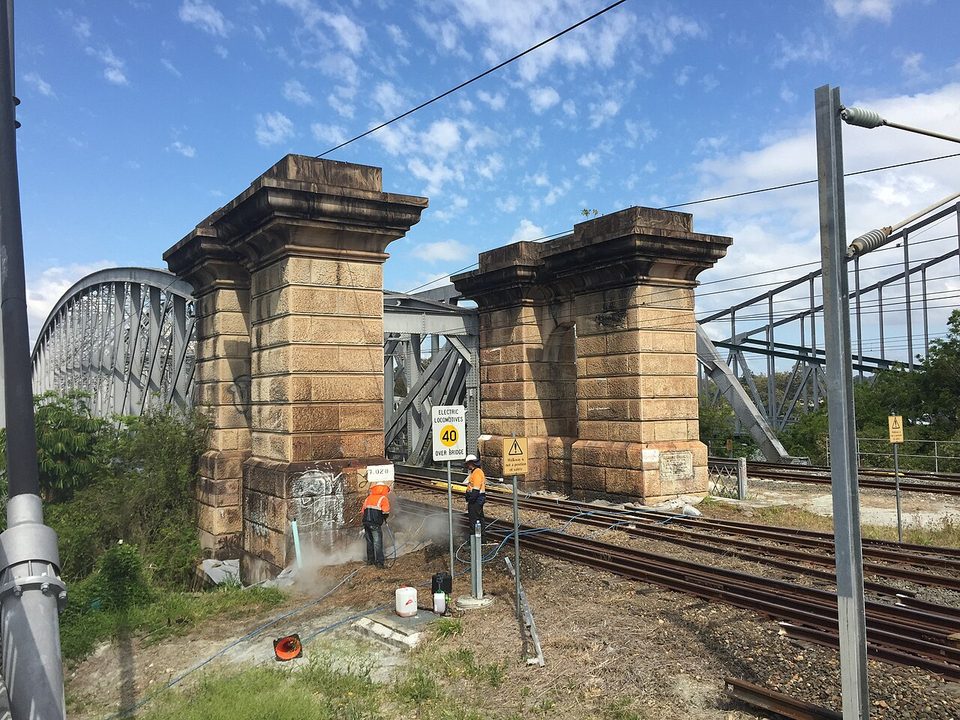

Wear gloves, eye protection and a mask with graffiti removers: many are strong solvents. Don’t wash residue into the stormwater drain. On heritage or very porous surfaces, get a specialist: the wrong product pushes the paint deeper into the stone.
For a wall that’s tagged again and again, ask the committee about an anti-graffiti coating. Sacrificial coatings come off with the graffiti and are reapplied; permanent coatings let graffiti wipe off.
Many councils also run graffiti removal programs or supply free removal kits for private property; check yours.
Wear and tear: the planned fix
Wear and tear is predictable, so it should be planned:
- Keep a list of high-wear spots (lift lobbies, corridor corners, the bin room door, the car park pedestrian gate) and check them monthly.
- Replace worn hardware before it fails: a lever with a weak spring, a closer starting to leak.
- Suggest protection where wear is constant: corner guards, kick plates (not on fire doors without approval), wall protection rails at trolley height.
- Feed bigger items into the building’s maintenance plan (repainting, carpet replacement) through the strata manager.
At Jacaranda Court
Monday morning: the car park pedestrian gate has a tag on it and the lever on the bin room door is snapped off. You photograph both and report them with a police event number. The CCTV shows someone at 2 am, which the strata manager passes on. You remove the tag from the powder-coated gate with a smooth-surface remover (tested first), and fit a temporary lever so the bin room locks. A replacement lever in the building’s brand goes on the work order, and you suggest a sturdier vandal-resistant lever for that door.
On the job 12
Walk your building with a camera and record every piece of damage you can find, with the date. That’s your baseline: anything new from now on can be dated.
Sources
- Queensland Government, Body corporate maintenance responsibilities
- NSW Government, Strata living (by-laws and recovering costs)
Quick quiz
Pick an answer for each question. Nothing is recorded.
General education, not trade or legal advice. Licence limits, asbestos rules and window safety laws differ by state and change, so check your regulator before you quote or start. If a job involves electricity, plumbing, gas, waterproofing, fire doors or anything you think may contain asbestos, stop and get the right licensed trade.