
Strata Repairs and Maintenance
Lesson 2: Safety first: asbestos, lead and ladders
Goal: before any job that cuts, sands, drills or climbs, know how to check for asbestos and lead and how to work at height safely.
Small repairs feel low-risk. In older strata buildings they aren’t. Drilling one hole through the wrong sheet, or dry-sanding the wrong paint, can harm you and every resident who uses that corridor. These checks take five minutes.
Asbestos
Asbestos was used in Australian buildings for decades and was banned in 2003. Health guidance: buildings built or renovated before 1990 are likely to contain it somewhere. In apartment blocks, look out for:
- fibre cement sheet (“fibro”) in bathroom and laundry walls and ceilings, eaves, and the backing of meter boards
- textured or sprayed ceilings (“popcorn”)
- vinyl floor tiles and the adhesive or backing underneath
- pipe lagging, old flues, and fire doors from that era
Asbestos is harmless while it’s intact and left alone. It becomes dangerous when fibres are released by cutting, drilling, sanding, breaking or water-blasting it.
The law: under the model WHS regulations, a workplace built before 31 December 2003 must have an asbestos register, kept by whoever manages or controls it. Most strata buildings with common property contractors keep one. Ask the strata manager for it and read it before you work in a new area.
If the register doesn’t cover the spot you’re about to disturb, or there’s no register:
- Stop. Assume it’s asbestos.
- Get a sample tested by a licensed assessor or an accredited lab, or have a licensed removalist do the work.
- Never drill, cut or sand it yourself to “have a look”.

Lead paint
Health guidance: the Australian Government’s Lead Alert guide says homes built before 1970 are most at risk of lead paint, and that later buildings may have it too, under newer coats. In a 1980s building, any original timber door frames, steel balustrades or doors repainted from an older stock are worth suspecting.
Lead is only a problem when you make dust or fumes from it:
- Don’t dry sand old paint, and never use a power sander on it.
- Don’t burn it off with a heat gun or a flame.
- Do wet scrape and wet sand, with drop sheets taped down, and clean up with a damp cloth and a vacuum with a HEPA filter (not a broom).
- Keep children and pregnant residents away from the work area, and tell the strata manager before a big job.
If you’re not sure, a lead test kit from the hardware store gives a quick answer on the spot.
Dust from other materials
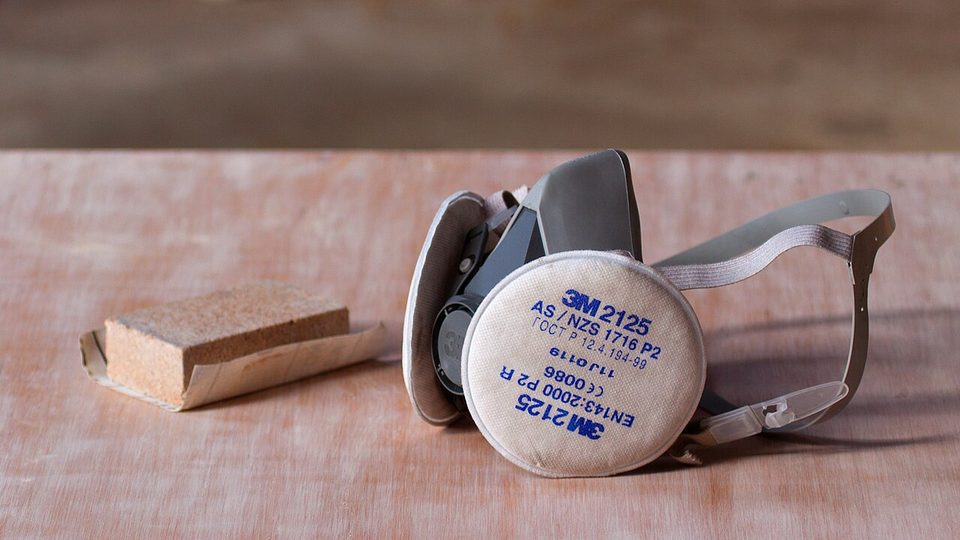
Cutting concrete, render, tiles or brick releases crystalline silica. Health guidance: use wet cutting or a tool with dust extraction, and wear a P2 mask. Sanding ordinary plaster filler is mostly a nuisance dust, but a mask is still wise and the residents will thank you for drop sheets.
Ladders and working at height
Falls are one of the commonest serious injuries in maintenance work, and most happen from low heights: a stepladder in a stairwell, a ladder on a wet tiled floor.
- Pick the right ladder. A platform ladder (with a handrail and a standing platform) is safer than a stepladder for anything over a minute. Use industrial-rated ladders (120 kg or more), not the domestic one from home.
- Set it up properly. Firm, level, dry ground. Extension ladders at 1 out for every 4 up, extending 1 m above the landing, tied or footed.
- Three points of contact while climbing. Don’t stand on the top two steps of a stepladder, and don’t overreach: move the ladder.
- Stairwells are the hard case. Never balance a ladder on stairs. Use a stair platform or a ladder made for stairs, or call a contractor with the right gear.
- Barricade the area. A corridor is a public walkway: put out cones or a sign so a resident doesn’t walk into the ladder.
The law: under WHS law the person conducting the business must manage the risk of falls, and the model code of practice prefers working from the ground or a solid platform over ladders. If you’re employed by the body corporate or a caretaking business, that’s your employer’s duty as well as yours.
Before every job: the two-minute check
- What’s the material, and how old is it? (asbestos, lead)
- Will I make dust? (mask, drop sheets, wet methods)
- Will I be off the ground? (right ladder, barricade)
- Who else uses this space? (signs, timing, tell the residents)
- Is anything live? (power, water, gas: isolate it or call the trade)
At Jacaranda Court
The laundry block ceiling has a water stain and a soft spot. The ceiling is flat fibre cement sheet, original to 1986. You check the register: “Laundry ceiling: fibre cement, assumed asbestos, good condition.” So this is not your job. You tape off the laundry, put up a sign, and the strata manager books a licensed removalist and a plasterer. You find and fix the cause (a blocked overflow from the roof gutter, Lesson 4) while you wait.
On the job 2
Ask your strata manager for the asbestos register. Walk the building with it and mark on a floor plan every place it lists. Keep a copy in your toolbox.
Sources
- Safe Work Australia, Asbestos and Model code of practice: How to manage and control asbestos in the workplace
- Asbestos Safety and Eradication Agency, asbestossafety.gov.au
- Australian Government (2016), Lead Alert: The six step guide to painting your home, 5th edition
- Safe Work Australia, Crystalline silica and silicosis
- Safe Work Australia, Model code of practice: Managing the risk of falls at workplaces
Quick quiz
Pick an answer for each question. Nothing is recorded.
General education, not trade or legal advice. Licence limits, asbestos rules and window safety laws differ by state and change, so check your regulator before you quote or start. If a job involves electricity, plumbing, gas, waterproofing, fire doors or anything you think may contain asbestos, stop and get the right licensed trade.