
Strata Repairs and Maintenance
Lesson 8: Mould after a leak
Goal: decide safely whether mould is yours to clean, clean it properly if it is, and stop it coming back.
Mould is a fungus that grows wherever there’s moisture, warmth and something to feed on (plasterboard paper, timber, dust, soap scum). Its spores are everywhere in the air; what you see on a wall is where they’ve found water. Health guidance: mould can cause allergic reactions and asthma flares, and is a bigger risk for people with lung conditions or low immunity.
First: is the water still there?
Cleaning mould before fixing the moisture is wasted work: it comes back within weeks. Go back to Lesson 4: find the leak or the condensation, stop it, dry everything.
Can you clean it yourself?
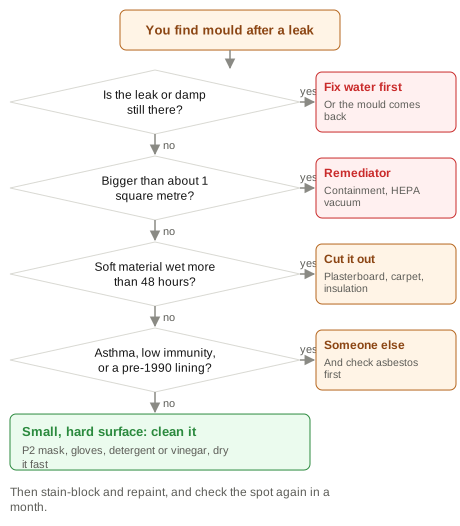
Health guidance: the US Environmental Protection Agency puts the limit for cleaning mould yourself at about 10 square feet (roughly 1 square metre). Bigger areas, mould in air-conditioning ducts, or mould after sewage water need a professional remediator who can contain the area, use HEPA vacuums and air scrubbers, and test.
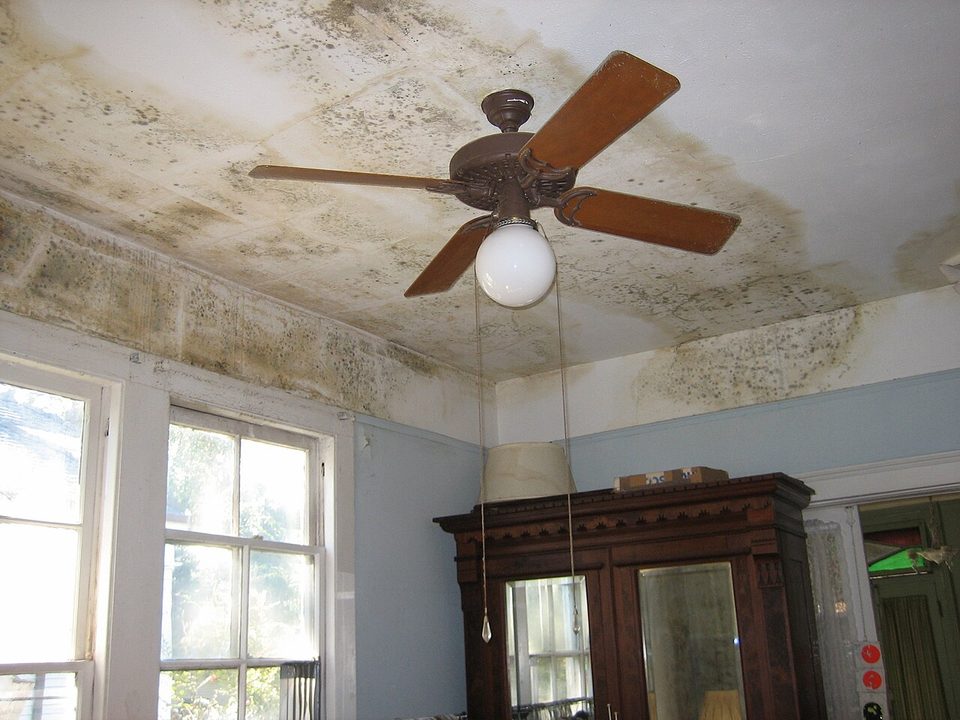

Protect yourself and the residents
- P2 mask (or a half-face respirator with P2 filters), gloves (rubber or nitrile) and goggles without vents.
- Old clothes you can wash straight after, separately.
- Close doors to the rest of the building. Open a window to the outside if there is one. Don’t run a fan that blows spores into the corridor.
- Mist mouldy surfaces lightly with water before you start, so spores don’t puff into the air. Never dry-brush or dry-sand mould.
Hard surfaces: clean them
Tiles, glass, metal, sealed timber, painted surfaces in good condition.
Health guidance: NSW Health suggests:
- mild detergent and water, or vinegar (4 parts vinegar to 1 part water), for routine cleaning
- if that doesn’t shift it and the item can’t be thrown out, diluted bleach (250 mL of bleach in 4 litres of water), with gloves, eye protection and good ventilation
Wipe with a microfibre cloth, rinsing it often in a separate bucket of clean water so you don’t spread the mould. Dry the surface completely afterwards.
Never mix bleach with vinegar, ammonia or other cleaners. The fumes are toxic. Use one product, rinse, then the next if you must.
Bleach whitens the stain but doesn’t penetrate porous materials, so on plasterboard it can leave mould growing below a clean-looking surface.
Soft materials: remove them
Plasterboard, ceiling insulation, carpet and underlay, and fabric that were wet for more than a day or two and are now mouldy usually can’t be cleaned. Health guidance: cut them out and replace them.
- Mist the area, then cut out the mouldy plasterboard at least 300 mm past the visible mould, back to the frame (Lesson 5). Check the asbestos register first if it’s an older lining (Lesson 2).
- Bag it in heavy plastic bags inside the room, seal them, and wipe the outside before carrying them through the building.
- Clean the exposed framing (it’s usually timber or steel: hard surfaces) and let it dry thoroughly. Check with the moisture meter.
- Replace the lining, then seal, stain-block and paint.
Stop it coming back
- Fix the moisture: the leak, the blocked exhaust fan, the gap in the silicone.
- In wet areas, paint with a kitchen and bathroom paint containing a mould inhibitor (Lesson 6).
- Check the spot again a month later and after the next wet spell.
Mould inside a lot
If the mould is inside an apartment and it’s from condensation (no leak), it’s the occupant’s or owner’s responsibility. If it’s from a leak in common property (a roof, an external wall, a pipe in a riser), the body corporate usually has to fix the cause and may have to fix the damage. Either way, report it to the strata manager with photos: mould complaints from tenants often become disputes, and early records help everyone.
At Jacaranda Court
The common laundry has black mould on the ceiling paint above the dryers, about half a square metre, and the exhaust fan has stopped. No leak, just steam with nowhere to go. You report the fan to the electrician. While you wait, in a P2 mask, gloves and goggles, you wipe the painted ceiling with the vinegar solution, rinse, and dry it. When the fan is replaced, you stain-block and repaint with a mould-inhibiting ceiling paint. You add the laundry fan to the monthly check list.
On the job 8
Put a mould kit together: P2 masks, nitrile gloves, goggles, microfibre cloths, two buckets, white vinegar, heavy bags and tape. Keep it separate from your painting gear.
Sources
- NSW Health, Mould (vinegar and bleach dilutions)
- Better Health Channel (Victoria), Mould removal at home (protective gear, never mixing cleaners)
- Australian Centre for Disease Control, Preventing mould exposure
- US Environmental Protection Agency, Mold cleanup in your home and A brief guide to mold, moisture and your home (10 square feet limit, 24 to 48 hour drying)
Quick quiz
Pick an answer for each question. Nothing is recorded.
General education, not trade or legal advice. Licence limits, asbestos rules and window safety laws differ by state and change, so check your regulator before you quote or start. If a job involves electricity, plumbing, gas, waterproofing, fire doors or anything you think may contain asbestos, stop and get the right licensed trade.