
Strata Repairs and Maintenance
Lesson 4: Water damage: find and stop the source
Goal: before you repair any water damage, find where the water comes from, stop it (or get it stopped) and make sure everything is dry.
Most of the patching and painting in a strata building is repairing water damage. And most repairs to water damage fail for one reason: someone painted over the stain before the leak was fixed or before the wall was dry.
1. Make safe
- Water near electricity: if water is coming through a light fitting, a switch or a ceiling with a downlight, turn off that circuit at the switchboard (or call the electrician) before you touch anything. Keep people out.
- A sagging ceiling: a bulging, water-filled plasterboard ceiling can collapse. Keep people out from under it. Lesson 7 shows how to drain it safely.
- Stop the flow if you can: the lot’s stop tap, the building’s isolation valve, a bucket and a tarp.
- Photograph everything before you clean up. It’s the insurance evidence.
2. Find the source
Practitioner tip: a stain shows where water ended up, not where it got in. Water runs along pipes, slab surfaces and framing, sometimes for metres, before it shows on a ceiling.
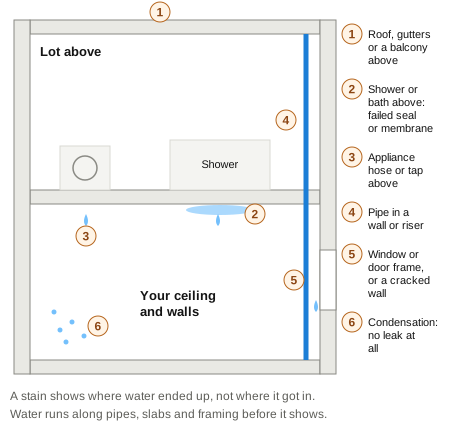
Questions that narrow it down quickly:
| Clue | Likely source |
|---|---|
| Only after rain, worse in storms | Roof, gutters, box gutter overflow, balcony, window or wall |
| Only after someone above showers | Shower seal, grout or membrane above |
| Constant, even in dry weather | A pipe: supply pipes leak all the time, waste pipes when used |
| Near an external wall, worse in winter, black speckles, no drip | Condensation |
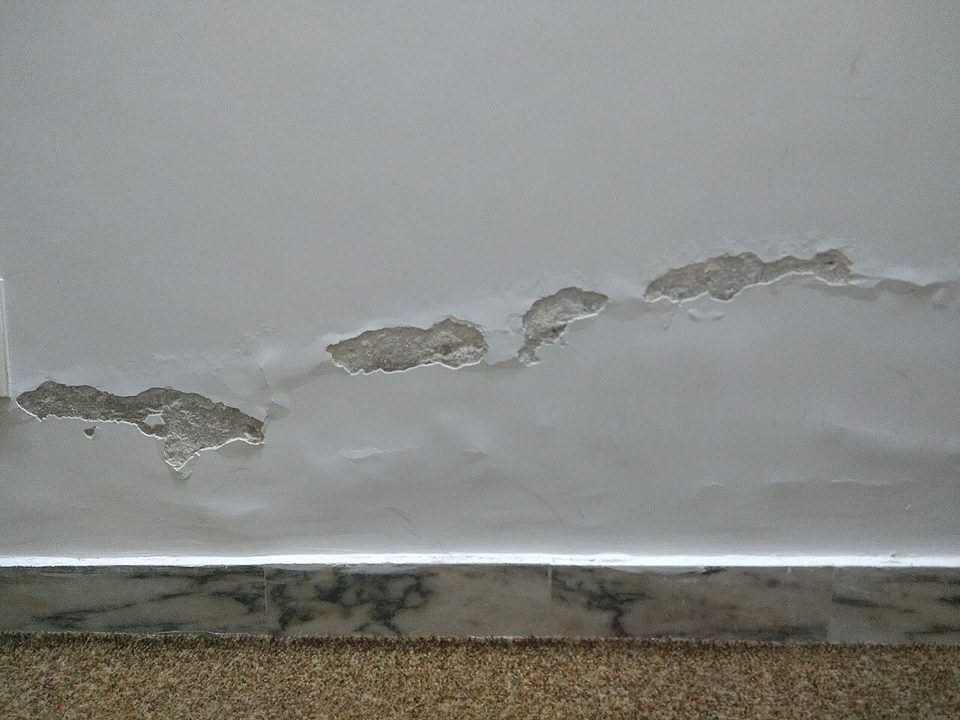
| Low on a wall, a tide line, salt crystals | Rising damp or water ponding outside |
Test one thing at a time. To check a shower above, ask the occupant to run only the shower for ten minutes while you watch the ceiling below, then the bath, then the basin. To check a window, run a hose on it while someone watches inside, starting low and working up.
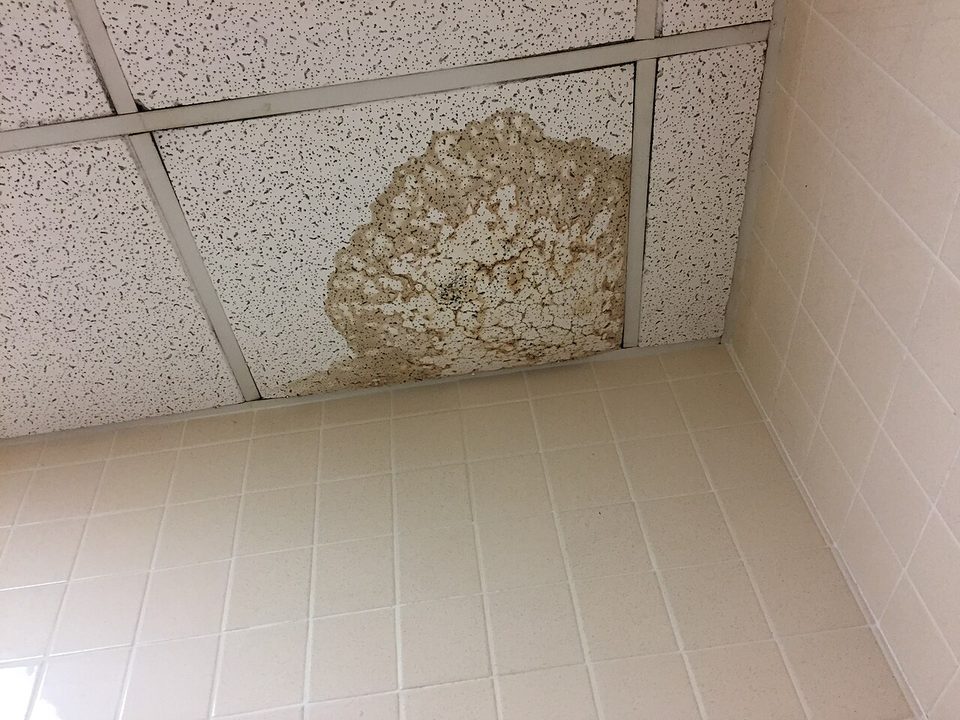

3. Leak or condensation?
Condensation looks like a leak but needs a completely different fix. Warm, moist air (showers, cooking, drying clothes inside, people breathing) meets a cold surface and turns to water. It shows up as:
- black speckled mould spread evenly over a cold wall or ceiling corner, rather than a stain with a tide line
- worse in winter, behind furniture pushed against external walls, in rooms with no exhaust fan
- water running down the inside of windows in the morning
The fix is ventilation (exhaust fans that work and vent outside, opening windows, moving furniture off the wall), not patching. If it’s inside a lot, it’s usually the occupant’s issue, and a polite note with a fact sheet helps more than a repair.
4. Stop it, or get it stopped
Most sources of water are licensed work: plumbing, waterproofing, roofing. Your job is to find it, describe it clearly in a work order (Lesson 7 of the Strata Building Management course covers work orders), and make safe until the trade arrives. Some things you can fix yourself:
- clearing a blocked gutter, balcony drain or box gutter outlet (from a safe position: Lesson 2)
- resealing silicone around a bath, basin or window frame (Lesson 13)
- tightening a loose hose fitting on a common laundry machine (taps and pipes are the plumber’s)
5. Dry it out
Health guidance: dry wet building materials within 24 to 48 hours to stop mould growing. After that, porous materials like plasterboard, insulation and carpet underlay often can’t be saved (Lesson 8).
- Open up: lift wet carpet, remove skirting boards, drill small holes low in the plasterboard to drain trapped water.
- Move air: fans, open windows, and a dehumidifier in closed rooms. Big events need a restoration company with commercial drying gear.
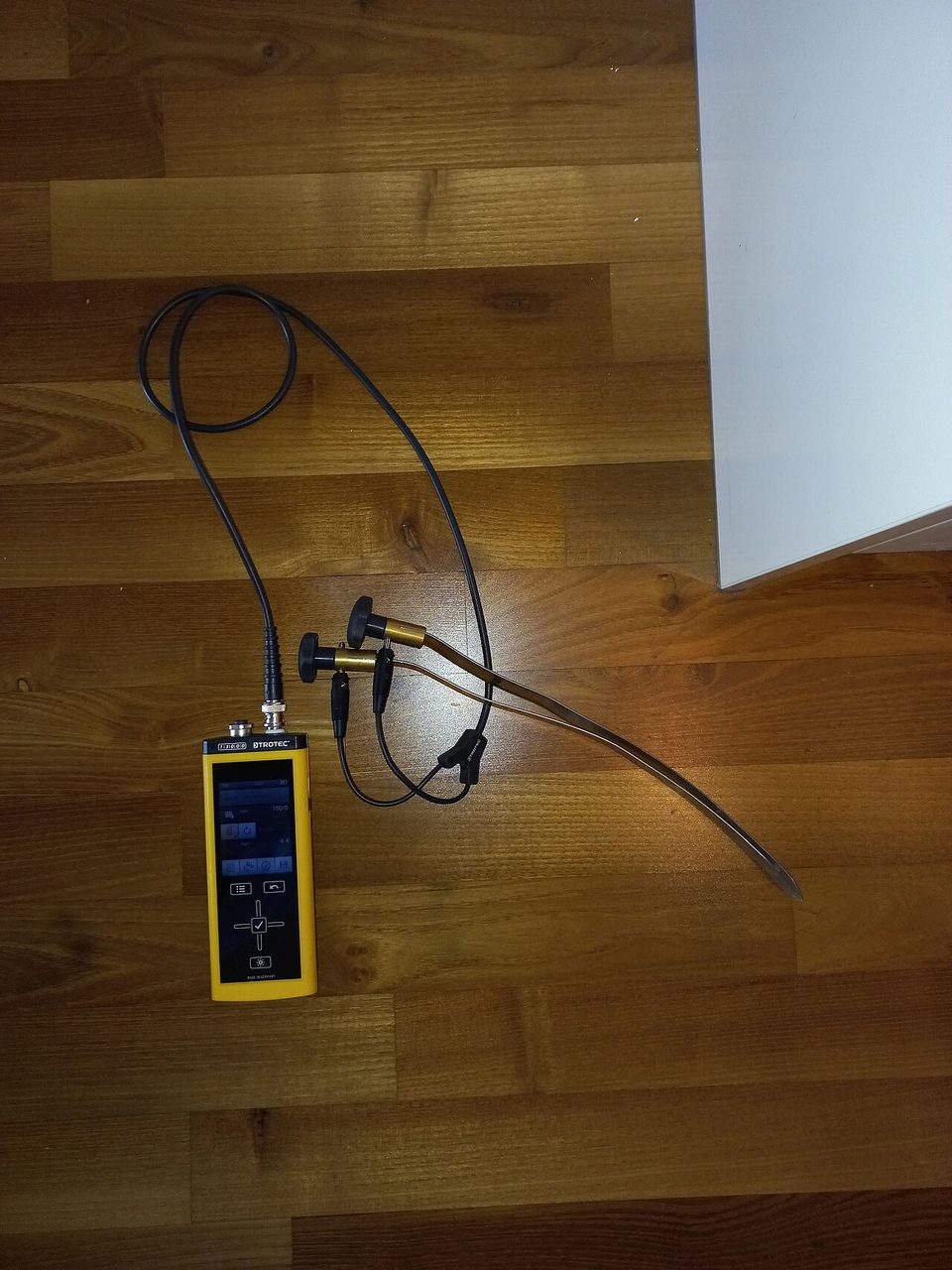
- Measure, don’t guess. A moisture meter compares wet areas with a dry reference spot in the same material. Don’t patch or paint until the readings match the dry spot.


6. Tell the strata manager
Water damage often becomes an insurance claim. Tell the strata manager the same day with photos, the cause (or what you suspect), what you did to make safe, and any lots affected. Don’t throw away damaged material until they say so: the insurer’s assessor may want to see it.
At Jacaranda Court
After a storm, the level 4 corridor ceiling shows a stain near the stairwell. It only happens in heavy rain. You go onto the roof (safely, with the roof access procedure) and find the box gutter outlet blocked with leaves and a tennis ball. You clear it, photograph before and after, and raise a work order to have a leaf guard fitted. The ceiling reads wet on the meter for nine days with a fan running. On day ten it reads the same as the dry corridor, and you move on to Lesson 7.
On the job 4
Pick the last three water stains in your building. For each, write down where the water actually came from. If you don’t know, that’s the job for this week.
Sources
- US Environmental Protection Agency, A brief guide to mold, moisture and your home (dry within 24 to 48 hours)
- NSW Health, Mould (condensation, rising damp and ventilation)
- Better Health Channel (Victoria), Mould removal at home
Quick quiz
Pick an answer for each question. Nothing is recorded.
General education, not trade or legal advice. Licence limits, asbestos rules and window safety laws differ by state and change, so check your regulator before you quote or start. If a job involves electricity, plumbing, gas, waterproofing, fire doors or anything you think may contain asbestos, stop and get the right licensed trade.