
Strata Repairs and Maintenance
Lesson 1: What you can fix yourself
Goal: tell, before you pick up a tool, whether a job is yours to do, needs a licensed trade, or needs approval first.
Three questions before every job
- Is it a licensed trade? Some work needs a licence whatever it costs.
- Is it over the value limit? Building work over a set amount needs a licensed builder, even if anyone could physically do it.
- Are you allowed to spend the money and touch the thing? That’s your agreement, your approval limit and who owns the item (common property or a lot).
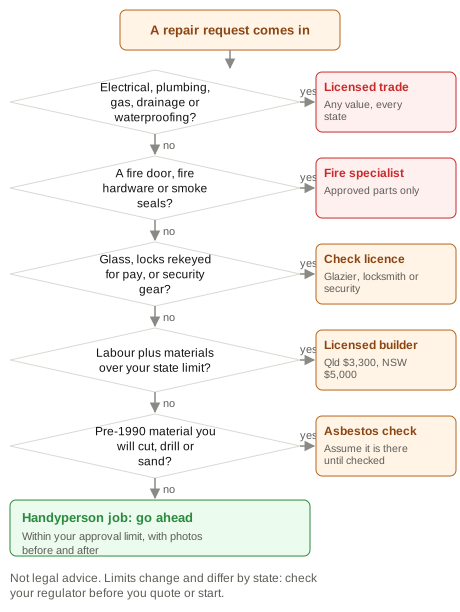
Trades that always need a licence
The law: in every state and territory, these need a licensed tradesperson no matter how small the job:
- Electrical: replacing a light fitting, a switch, a power point or a hard-wired smoke alarm. Changing a globe or a battery is fine.
- Plumbing, drainage and gas: taps, toilets, pipes, hot water units, gas appliances. (Some states let anyone change a tap washer; check yours before you rely on that.)
- Waterproofing: shower and balcony membranes. Resealing silicone along a bath edge is maintenance (Lesson 13); stripping and redoing a shower is not.
- Fire protection: fire doors, their hardware and seals, fire extinguishers, hose reels, alarms. In Queensland fire protection work needs a QBCC licence at any value. Lesson 10 explains what this means for door closers.
Two more to check in your state:
- Locks and security equipment. In NSW, changing or repairing locks for payment, and installing security equipment such as CCTV, needs a Class 2 security licence. In Queensland, installing or servicing security equipment for reward needs a security equipment installer licence. An employee working on their own employer’s building is treated differently from a contractor, so if you’re paid by the job, check before you rekey anything (Lesson 9).
- Glass. Replacing broken glass is glazing work, and safety glass rules apply. Board it up and call a glazier.
Value limits for building work
Above a set value, ordinary building work (carpentry, plastering, painting, tiling) needs a licensed builder or trade contractor.
| State | Licence needed above | Counts |
|---|---|---|
| Queensland (QBCC) | $3,300 | All labour and materials, whoever supplies them |
| New South Wales (Fair Trading) | $5,000 | Labour and materials, including GST |
| Other states | Different limits and rules | Check your building regulator |
The law: the limit is for the whole job. Splitting a $6,000 repaint into two invoices to stay under the NSW limit is still unlicensed work. These figures were current in November 2026; regulators change them.
Who owns it, and who approved it
Even a job you’re allowed to do needs someone to say yes:
- Common property: the committee sets your spending limit, usually in your caretaking agreement or a committee resolution. Within it, raise a work order and go. Over it, quote and wait for approval.
- Inside a lot: it’s the owner’s job, not the body corporate’s. If an owner asks you to fix something in their apartment, that’s private work between you and them, outside your strata agreement. Check your agreement allows it and that your insurance covers it.
- The grey zone: some things straddle the boundary (a front door, a window, the plasterboard ceiling under a leaking shower). Ask the strata manager before you spend body corporate money on something that might belong to a lot.
Practitioner tip: photograph every job before you start, part way through and when it’s finished. The photos settle arguments about what was there, prove the work was done, and are the evidence an insurer or a tribunal wants later.
At Jacaranda Court
Monday’s list has five jobs: a scuffed corridor wall on level 2, a loose lever on the bin room door, a flickering light in stairwell B, a dripping tap in the laundry and a cracked pane in the lobby door. You do the first two. You report the light to the electrician and the tap to the plumber on the building’s contractor list, and tape and board the cracked pane and call the glazier. Three work orders raised, two jobs done, nobody’s licence or insurance at risk.
On the job 1
Find your own approval limit: it’s in your agreement or a committee minute. Then write a one-page list of the trades you call for each licensed job (electrician, plumber, glazier, fire services company, locksmith) with their after-hours numbers.
Sources
- Queensland Building and Construction Commission, When you need a licence
- NSW Fair Trading, Home building licence check
- NSW Police Force, Security Licensing and Enforcement Directorate, Class 2 licences
- Queensland Government, Apply for a security equipment installer licence
- Queensland Government, Body corporate maintenance responsibilities
Quick quiz
Pick an answer for each question. Nothing is recorded.
General education, not trade or legal advice. Licence limits, asbestos rules and window safety laws differ by state and change, so check your regulator before you quote or start. If a job involves electricity, plumbing, gas, waterproofing, fire doors or anything you think may contain asbestos, stop and get the right licensed trade.