
Strata Repairs and Maintenance
Lesson 7: Water stains and damaged ceilings
Goal: repair a water-stained or water-damaged ceiling or wall so the stain never comes back, and know when the board has to go.
Before anything in this lesson: the leak is fixed and the area is dry (Lesson 4). Every step below fails on a wet surface.
Is the board still sound?
Press gently with your palm and check with the moisture meter.
| What you find | What it means | Repair |
|---|---|---|
| Stain only; board hard, flat and dry | Cosmetic | Stain-blocking primer and repaint |
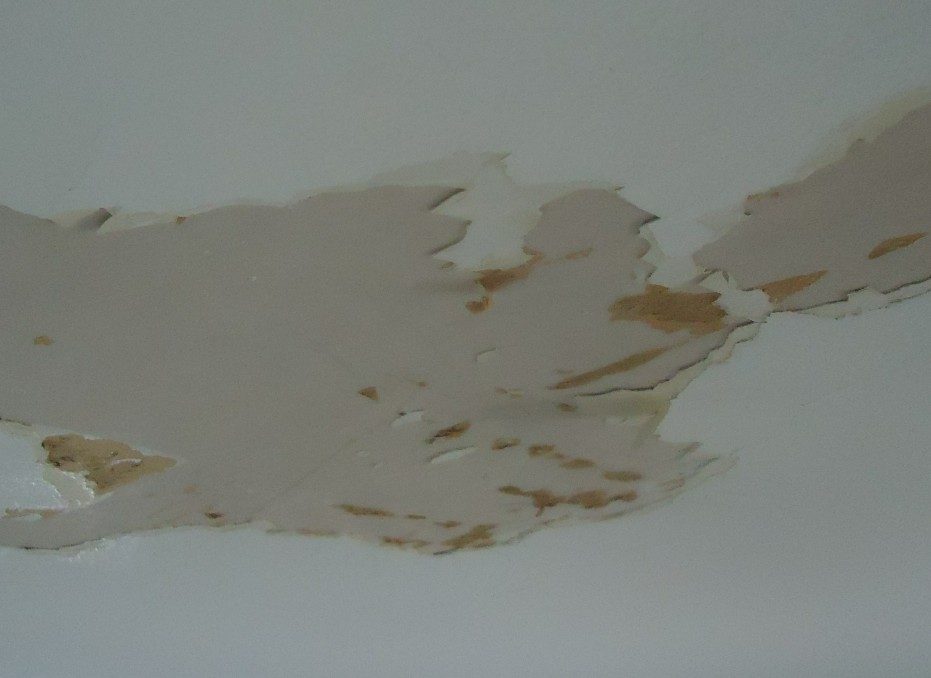
| Paint peeling or bubbling; board hard | Paint lost adhesion | Scrape, sand, prime, repaint |
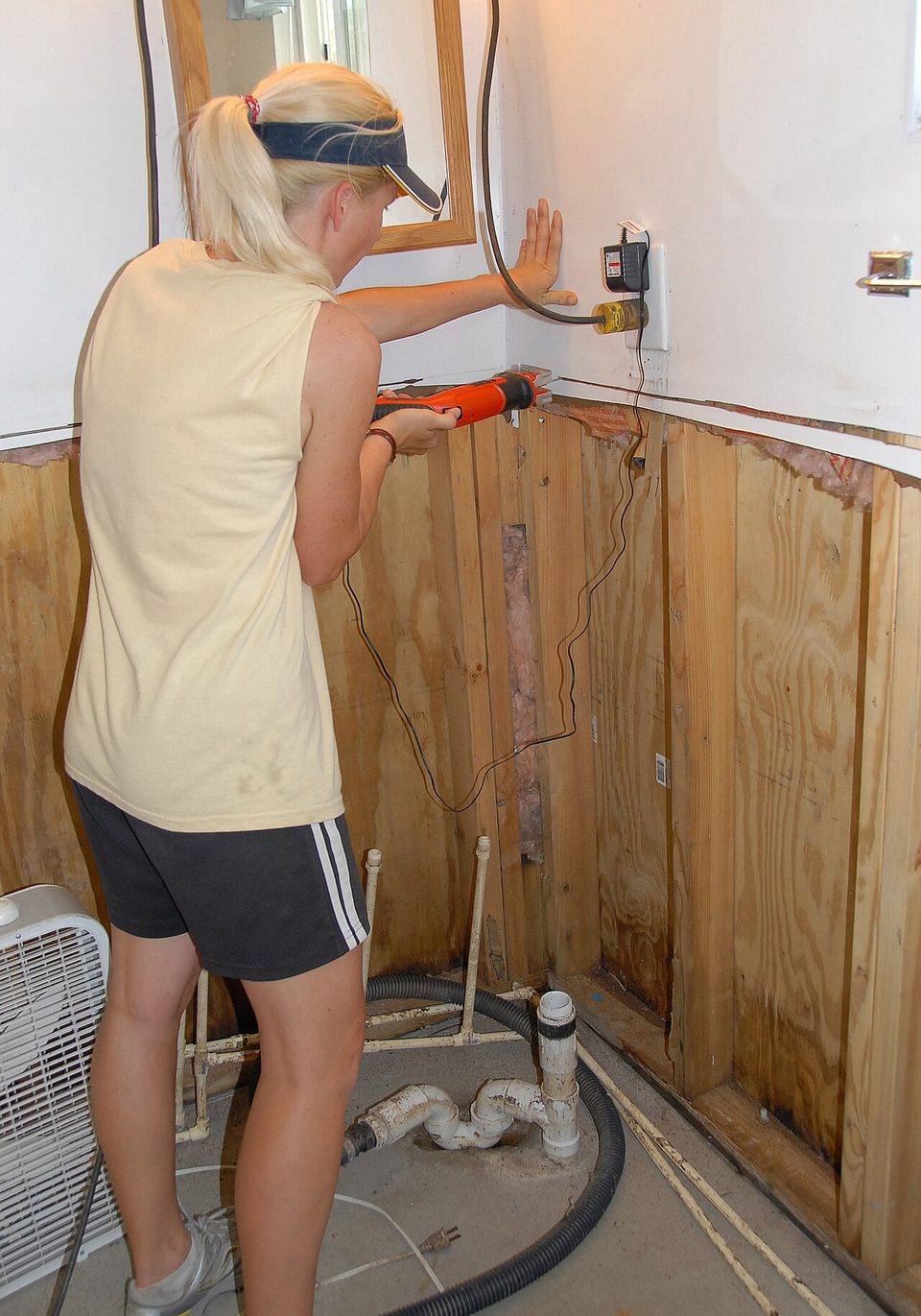
| Board soft, crumbly or paper delaminating | Gypsum core damaged | Cut out and replace the section (Lesson 5) |
| Sagging between joists | Board weakened, may fall | Make safe; replace |
| Mould on or behind the board | Wet too long | Lesson 8, then replace |

A sagging ceiling full of water
A plasterboard ceiling holding water is heavy and can drop suddenly in one piece.
- Keep everyone out from under it. Cover the floor and move furniture.
- Turn off the power to any light fittings, fans or smoke alarms in that ceiling (or have the electrician do it). Water and downlights don’t mix.
- Put a bucket (or a bin) under the lowest point of the bulge.
- From the side, not from underneath, pierce the lowest point with a screwdriver to let the water out in a controlled stream. Make a second hole if it slows.
- Once drained, the sagging board has lost its strength. Prop it if needed and plan to cut it out and replace it.
Report it straight away: a collapsed ceiling is an insurance claim and often a WHS incident.
Covering a stain so it stays covered
Water stains contain minerals and tannins that dissolve in water-based paint and wick back through, often within days.
- Make sure the stain is dry and the cause fixed.
- Clean the area. If there’s any mould, deal with it first (Lesson 8).
- Apply a stain-blocking primer over the stain and 100 mm beyond. Oil-based and shellac-based stain blockers are the most reliable; there are water-based ones that work on light stains. Manufacturer says: check the label says it blocks water stains.
- If the stain still shows through after drying, apply a second coat.
- Paint the whole ceiling (or the wall to a break) in the ceiling or wall paint (Lesson 6).
Practitioner tip: a can of spray stain blocker is ideal for a small stain on a ceiling: less mess than a brush overhead. Mask the cornice and wear safety glasses.
Peeling and bubbling paint
Water gets behind paint and lifts it. Scrape off everything loose with a broad knife (wet scrape if the paint is old: Lesson 2). Sand the edges smooth so they don’t show as ridges through the new paint, fill any dips, seal with primer (stain-blocking if there are marks), and repaint.
If the plasterboard’s paper face has lifted, cut the loose paper away with a sharp knife, seal the exposed gypsum with a primer made for damaged paper, then skim with topping compound. Painting straight over torn paper makes it bubble.
Replacing a section of ceiling
Ceilings are harder than walls: you’re working overhead, the sheets are heavier, and the joints have to be flat because ceilings catch light from windows. For anything bigger than about 600 by 600 mm:
- Cut back to the joists (find them with a stud finder or the screw lines).
- Use a sheet lifter or a second person: never hold a sheet up with your head.
- Use the same thickness as the existing ceiling, with the right screws and spacing for ceilings.
- Fix new insulation if the old was wet.
Practitioner tip: a whole ceiling, or anything with a cornice, is usually worth handing to a plasterer. They’ll be quicker, flatter, and it keeps you under your state’s value limit.

At Jacaranda Court
The level 4 corridor ceiling from Lesson 4 is dry. The board is hard, so it’s a cosmetic stain. You spray two coats of stain blocker, then roll the whole corridor ceiling between the lift lobby and the stairwell door in flat ceiling white. A month later, after the next storm, no stain.
On the job 7
Check the products in your kit: is your primer actually a stain blocker? Read the label. If it isn’t, buy one before you next need it.
Sources
- Gyprock (CSR), Plasterboard installation and repair guides
- US Environmental Protection Agency, Mold cleanup in your home (when to replace porous materials)
- NSW Health, Mould
Quick quiz
Pick an answer for each question. Nothing is recorded.
General education, not trade or legal advice. Licence limits, asbestos rules and window safety laws differ by state and change, so check your regulator before you quote or start. If a job involves electricity, plumbing, gas, waterproofing, fire doors or anything you think may contain asbestos, stop and get the right licensed trade.