
Strata Repairs and Maintenance
Lesson 9: Door handles and locks
Goal: replace a lever set so it fits first time, fix the common faults, and know which lock jobs belong to a locksmith.
The parts
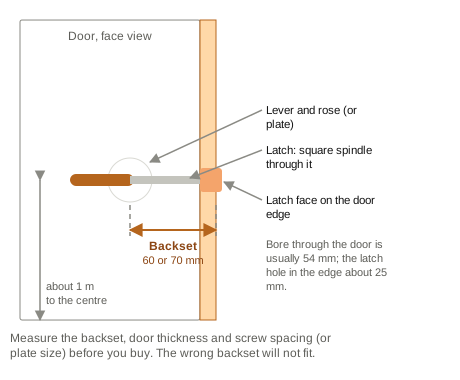
Most internal doors in Australian apartments have a tubular latch (a round barrel in a bored hole) with a lever set on a round rose or a rectangular plate. Front doors and doors on common areas often have a mortice lock: a rectangular box set into a slot in the door edge, with a cylinder for the key and levers on plates.
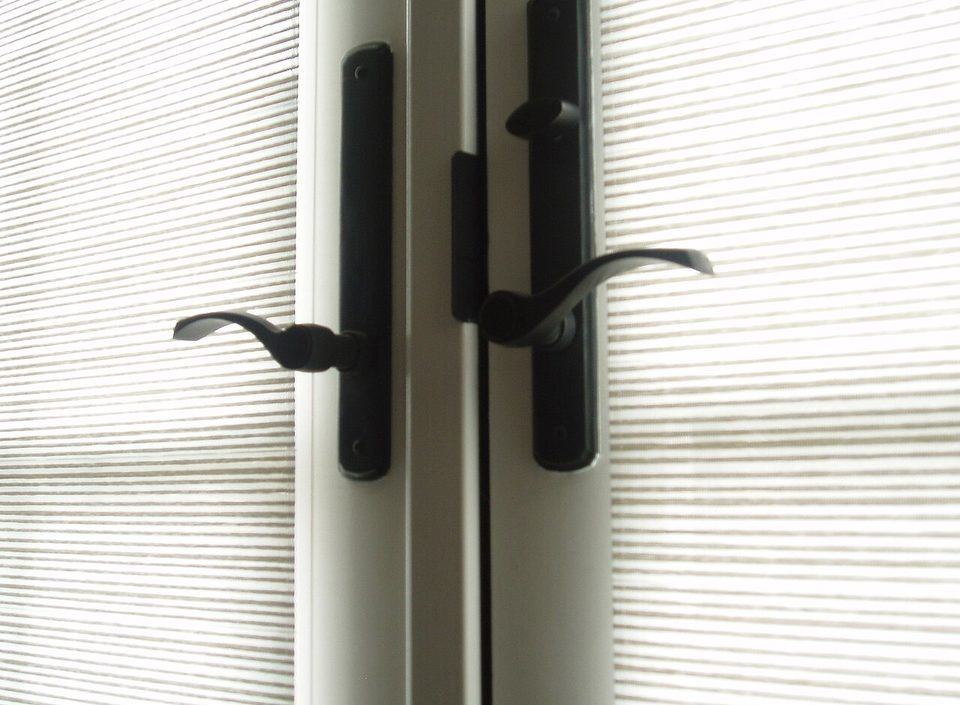

Passage, privacy or entrance?
| Function | Where | How it works |
|---|---|---|
| Passage | Corridors, cupboards, common rooms that don’t lock | Latch only, levers on both sides |
| Privacy | Common toilets, bathrooms | Turn snib inside; emergency release (a slot) outside |
| Entrance | Bin room, plant room, storage, office | Key outside, turn or button inside |
| Store room / classroom | Plant rooms that should always lock | Outside lever always locked, opens with the key |
Buy the same function as the one you’re replacing, in the building’s standard brand and finish where you can.
Before you buy: measure
- Backset: door edge to the centre of the existing handle. Usually 60 mm (most internal doors) or 70 mm.
- Door thickness: usually 35 mm internal, 40 mm or more for front and fire doors. Check the set’s range.
- Handing: most levers are reversible, but some plates are left or right handed.
- Latch face: round-corner, square-corner or a drive-in latch; match the existing cut-out in the edge.
- Rose or plate size, and whether new screw holes will land on the old ones, so you’re not left with marks.
Practitioner tip: take the old latch with you to the hardware shop, or photograph it next to a tape measure.
Replacing a lever set
- Remove the screws on the inside rose (some have a small grub screw under the lever: use a 2.5 or 3 mm Allen key) and pull the levers off both sides.
- Remove the two screws holding the latch face in the door edge and slide the latch out.
- Fit the new latch with the bevel facing the way the door closes (the sloped side hits the strike first).
- Slide the spindle through the latch, fit the outside lever and rose, then the inside, and screw them together through the door. Don’t overtighten: it makes the lever stiff.
- Check the lever springs back level, the latch retracts fully, and on privacy and entrance sets that the lock works from both sides and the emergency release opens it.
- Close the door gently and check the latch catches the strike (below).
Common faults
| Fault | Usual cause | Fix |
|---|---|---|
| Lever loose or wobbly | Grub screw or through-bolts worked loose | Tighten; add thread-locking compound to grub screws |
| Lever droops and doesn’t spring back | Return spring in the rose broken or weak | Replace the rose or the whole set |
| Latch won’t catch | Door has dropped, frame moved, strike misaligned | Tighten hinge screws (Lesson 10); move or file the strike plate |
| Latch sticks in | Paint in the latch hole, latch dry or broken | Clean, a dry graphite or PTFE lubricant; replace if broken |
| Door rattles when shut | Gap between latch and strike | Bend the strike’s tongue in slightly, or fit a new strike |
To find where the latch hits, rub a little crayon or lipstick on the latch, close the door, and see where the mark lands on the frame. Move the strike plate to match, or file the opening a couple of millimetres.
Locks, keys and the locksmith
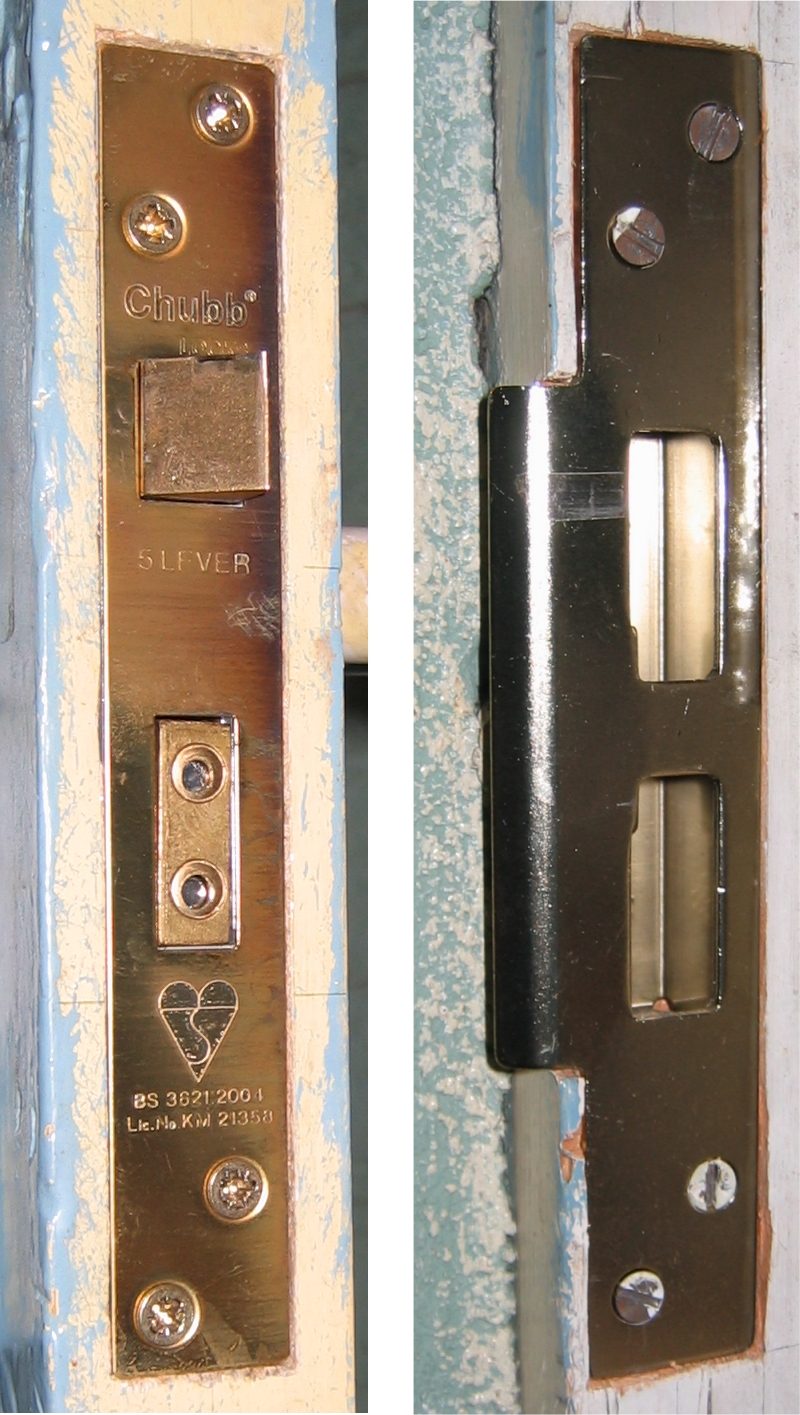

Leave these to a locksmith:
- Master key systems. Most strata buildings have one: a master key opens the plant rooms, bin room and common doors, and residents’ keys fit their own door and the entry. Changing a cylinder or cutting a key in the wrong profile breaks the system. Restricted keys can only be cut by the locksmith who holds the system.
- Rekeying and changing cylinders, and anything on an access control or intercom system.
- The law (NSW): changing or repairing locks for payment needs a Class 2 security licence. Queensland licenses security equipment installers. If you’re paid by the job, check your state’s rules before you touch a lock.
Apartment front doors and fire doors
The law: in most multi-storey apartment buildings, the front doors of the apartments and the doors to stairwells are fire doors, required by the National Construction Code to stop fire and smoke spreading into the escape routes. They have a metal compliance tag on the hinge edge, and must be self-closing and self-latching.
That changes what anyone can do to them:
- Replace hardware only like for like with hardware approved for that door. A different lock, a new hole for a deadbolt or a peephole, or a pet door can void the door’s certification.
- Don’t paint over the tag, and don’t remove or wedge the closer.
- Residents who want a different lock on their front door need body corporate approval and a fire door specialist.
This is why Lesson 1 sends fire door work to a specialist. Your part is to notice and report: a door that doesn’t close and latch by itself, a missing tag, a new deadbolt someone has fitted.
At Jacaranda Court
The bin room lever droops and the door doesn’t latch, so the room is left open to anyone. You find the return spring broken. It’s an entrance function set on the master key system, so you order the same brand and function from the building’s locksmith, with the cylinder keyed to the system. While you wait, you tighten the hinge screws and move the strike plate 2 mm so the latch catches. When the new set arrives, the locksmith fits the cylinder and you’re the second set of hands.
On the job 9
Walk your building and list every door’s function (passage, privacy, entrance, fire door). Note any fire door that doesn’t close and latch by itself, and report them.
Sources
- NSW Police Force, Security Licensing and Enforcement Directorate, Class 2 licences
- Queensland Government, Apply for a security equipment installer licence
- Jamesons Strata Management, Apartments and fire doors: what are the regulations?
- Standards Australia, AS 1905.1 Components for the protection of openings in fire-resistant walls: fire-resistant doorsets and AS 1428.1 Design for access and mobility (lever handles)
Quick quiz
Pick an answer for each question. Nothing is recorded.
General education, not trade or legal advice. Licence limits, asbestos rules and window safety laws differ by state and change, so check your regulator before you quote or start. If a job involves electricity, plumbing, gas, waterproofing, fire doors or anything you think may contain asbestos, stop and get the right licensed trade.