
Strata Repairs and Maintenance
Lesson 11: Window handles, catches and restrictors
Goal: fix and replace window hardware without breaking the window, and check the safety devices that stop children falling.
Windows in strata buildings are usually aluminium, made by one of a handful of window companies in a few standard designs:
- Sliding: one panel slides past another. A catch (a sprung latch or a key lock) locks it.
- Awning: hinged at the top, opens outward at the bottom, with a chain winder or a sliding stay.
- Casement: hinged at the side like a door, with a handle and a winder or stay.
- Double hung: two panels slide up and down (more common in older buildings).
Whether a window belongs to the lot or the body corporate depends on your state and the building’s plan. Often the window glass and frame in the outer wall are common property, and the occupant looks after the moving parts inside. Check with the strata manager before you spend body corporate money on window hardware inside an apartment.
Identify the window first
Window hardware isn’t universal. Before ordering anything:
- Look for the brand and series stamped or stickered on the frame, the sash, or the old hardware (often on the hidden side).
- Photograph the part, front and back, next to a tape measure, and measure the screw hole spacing.
- Take the photos to a window hardware supplier or the window company. Most common parts for the main brands are stocked.
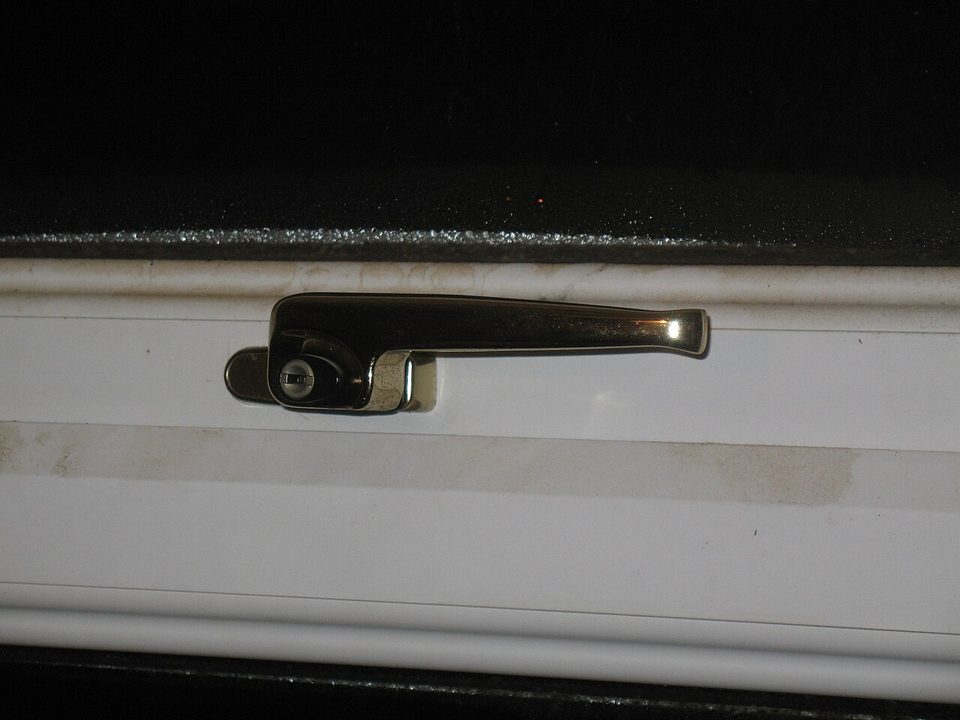

Replacing a handle or catch
- Open the window if you can, so you’re not working against the locked mechanism.
- Remove the screws (often under a cover cap that clips or slides off). Keep them: they’re usually a specific length.
- Fit the new part in the same position, using the old holes. Don’t drill new holes in an aluminium frame without knowing what’s inside it: some frames have glazing beads and drainage channels.
- Check it locks, unlocks and lines up with its keeper. Adjust the keeper (the part on the fixed frame) if it doesn’t engage.
Awning window winders
A winder that spins without moving the window has stripped its gears; one that jams has a bent chain or a seized mechanism.
- Open the window as far as it will go (or disconnect the chain from the sash bracket: there’s usually a clip).
- Unscrew the winder from the frame and lift it out with the chain.
- Fit the new winder of the same brand and chain length, connect the chain, and test the full range.
Practitioner tip: keep the window supported while the chain is disconnected, especially high up and in wind. An awning sash unhooked from its winder can swing out and drop.
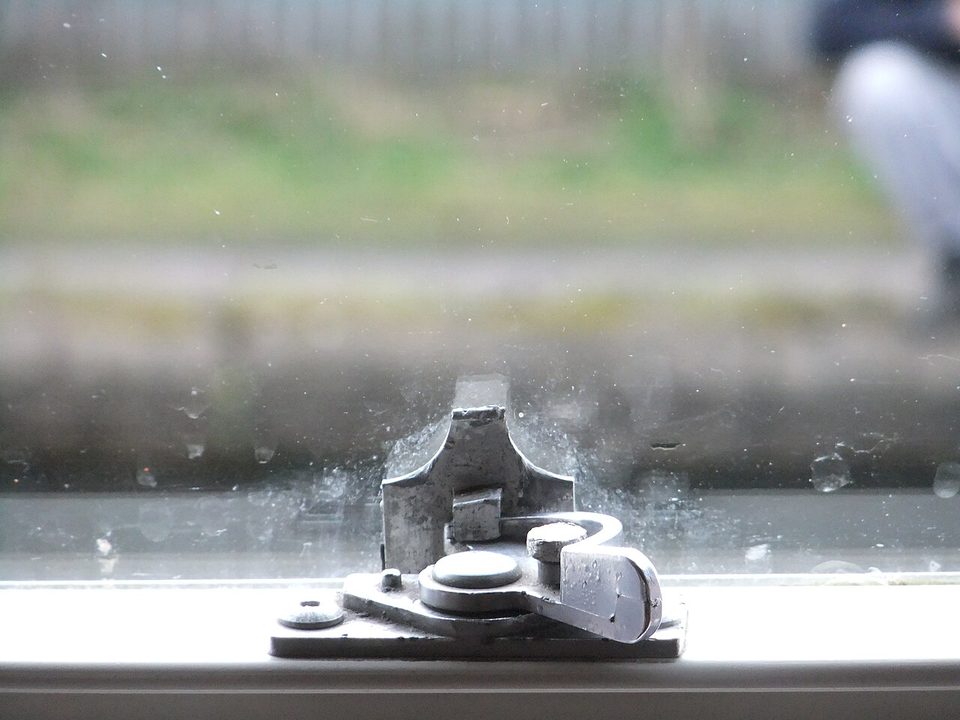

Stiff sliding windows and doors
- Vacuum the track, then wipe it with a damp cloth. Old buildings collect a surprising amount of grit, insects and sand.
- Clear the weep holes at the bottom of the frame (small slots on the outside) so rain can drain: blocked weep holes cause water to overflow inside (Lesson 4).
- Spray the track with a dry PTFE or silicone lubricant. Not grease: it holds grit.
- If it’s still stiff, the rollers may be worn or set too low. Many sliders have an adjusting screw at each bottom corner. Larger sliding doors are heavy: lift them out with two people.
Window safety devices
Every year young children are injured falling from windows and balconies, often from apartments. Windows that open wide above the ground are the risk.
The law (NSW): under the Strata Schemes Management Act 2015, owners corporations must install window safety devices on windows in strata buildings where a child could fall more than 2 metres. The devices must stop the window opening far enough to let a 125 mm sphere pass through, must be child-resistant, and must be able to be released in an emergency. Flyscreens don’t count. The deadline was March 2018, so a compliant building should already have them; your job is to keep them working.
Other states rely mostly on the building code for new buildings, but restrictors are good practice in any building with children.
When you maintain windows:
- Check every restrictor still works and limits the opening.
- Replace a broken restrictor straight away, with the right type for the window.
- Don’t remove a restrictor because a resident asks (they can usually be released for cleaning and then re-engaged).
- Report windows with low sills and no device to the strata manager.
At Jacaranda Court
A tenant on level 3 reports the bedroom awning window won’t close. The winder spins: stripped. Windows in Jacaranda Court’s outer walls are common property, so it’s your job. The frame sticker gives the brand and series; the window supplier has the winder in stock. Twenty minutes to swap it, and you check the window restrictor on the way out. It’s been released and left that way, so you re-engage it and show the tenant how to release it for cleaning.
On the job 11
Make a list of every window brand and series in your building, with photos of each kind of handle, catch, winder and restrictor, and where to buy parts.
Sources
- Netstrata, Window safety devices in strata (NSW): obligations (Strata Schemes Management Act 2015 s 118 and Regulation 2016)
- NSW Department of Planning, Housing and Infrastructure, Window safety
- Window hardware manufacturers’ replacement part guides
Quick quiz
Pick an answer for each question. Nothing is recorded.
General education, not trade or legal advice. Licence limits, asbestos rules and window safety laws differ by state and change, so check your regulator before you quote or start. If a job involves electricity, plumbing, gas, waterproofing, fire doors or anything you think may contain asbestos, stop and get the right licensed trade.